Resume Boss needed two systems in one: write the resume, then score it against the job.
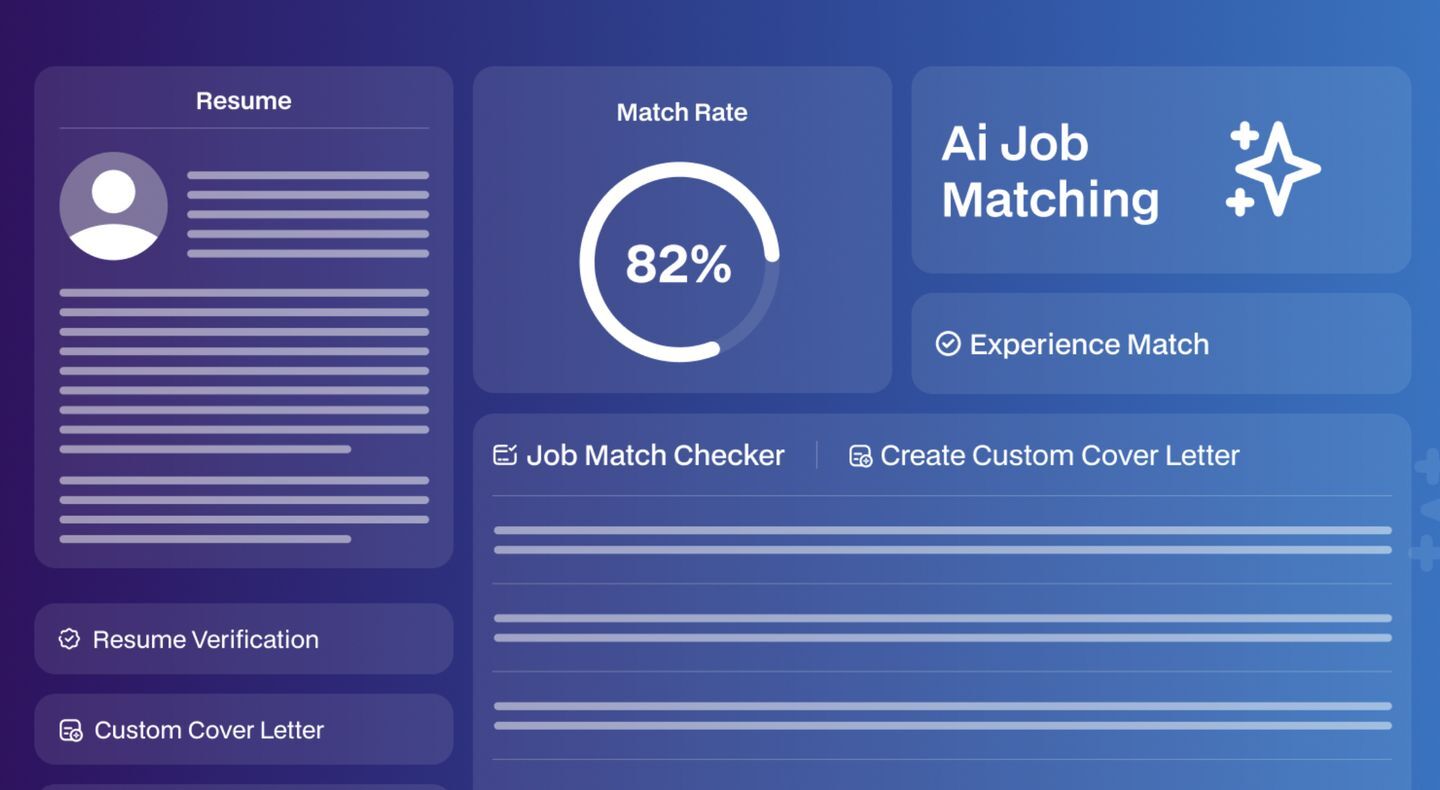
Medical students and physicians moving toward surgery were applying blind to ATS resume screening. Neuramonks delivered an AI resume builder plus a matching engine that returns a score for the target role and names what is missing. By Upendrasinh Zala, CEO · Reviewed by Williams, CTO

Delivered for Resume Boss
- 2-in-1
- Generate and match
- 35%
- Better match accuracy
- 45%
- Shorter hiring cycles
- Shorter hiring cycles
- 50-60%
- Less prep effort
Delivered for the L&D team
- 2-in-1
- Generate and match
- 35%
- Better match accuracy
- 45%
- Shorter hiring cycles
- Shorter hiring cycles
- 50-60%
- Less prep effort
The Client's Problem
Applying blind, with no read on what the role wanted.
- A resume written from a blank page
- Generated from structured medical credentials
- No read on how a resume fits a posting
- A match score against that specific role
- Guessing what to fix before applying
- A named list of what is still missing
What We Delivered
Two subsystems, six pieces of work.
- 01 · Generation Engine
- AI resume builder
- Builds from credentials, training and procedure history.
- AI resume builder
- 02 · Domain Data
- Medical skills taxonomy
- Specialties, surgical training paths, certifications.
- 03 · Matching Engine
- Job-to-resume scoring
- A percentage against the exact posting, tuned for ATS resume screening logic.
- 04 · Gap Analysis
- Missing-requirement detection
- Names what the role needs and the resume lacks.
- 05 · Recruiter Delivery
- Structured output
- Reaches medical recruiters in an assessable form.
- Structured output
- 06 · Backend Architecture
- Variants, no duplication
- Many role-specific versions on one data layer.
- Across all six · Candidate data
- Encrypted end to end
- Resumes and records encrypted in transit and at rest.
- Access-controlled by role
- Candidates, recruiters and admins see only their own scope.
- On-prem capable
- Deployable on-premises or air-gapped where policy requires.
Need scoring on top of a generator?
We scope which pieces your build actually needs, in 30 minutes.
The Result
A score before applying, and a list of what to fix.
Generation gives a credible medical resume built for the best AI resume builder standard in the specialty. Matching tells the candidate how close it is to the role and what is still missing — so recruiters receive applications that already clear ATS resume screening and meet the requirement list.
2-in-1
Built from structured medical data, then scored against the specific job before it is sent.
How The Engagement Ran
Four phases, taxonomy to production.
- Phase 1
- Discovery
- Candidate journeys mapped for students and practising physicians.
- Phase 2
- Skills taxonomy
- Clinical and surgical skills structured across specialties.
- Phase 3
- Generation engine
- AI resume builder over the structured credential model.
- Phase 4
- Matching and rollout
- Scoring, gap detection, then release to recruiters.
- Python
- spaCy
- TensorFlow
- Angular
- Laravel
- MongoDB
- AWS
- S3
Why Neuramonks
Why Resume Boss chose Neuramonks.
- Outcome-driven delivery
- Match and hiring targets set before development started.
- AI expertise since pre-GPT
- Production NLP shipped before the current wave, via our AI development services.
- Production-grade architecture
- Built for real candidate volumes and ATS resume tool reliability, not a demo.
- Deployable on your terms
- On-premises or air-gapped where policy requires it.
Common Questions
What teams ask about this build.
How does the match score work?
The engine parses the target posting for its requirements and compares them against the candidate's structured resume data, returning a percentage for that role.
What does the gap analysis show?
The requirements the resume does not yet meet, so the candidate can fix them before applying rather than after a rejection.
Who is the platform for?
Medical students entering the field and practising physicians moving toward surgical roles.
How is candidate data secured?
Encrypted in transit and at rest, access restricted by role, and deployable on-premises where policy requires it.
Does the approach work outside medicine?
Yes, though the skills taxonomy is domain-specific. Generation plus requirement-level scoring applies to any structured role spec.