The Corona Test UK could not take a passenger's word for it. We built the reader.
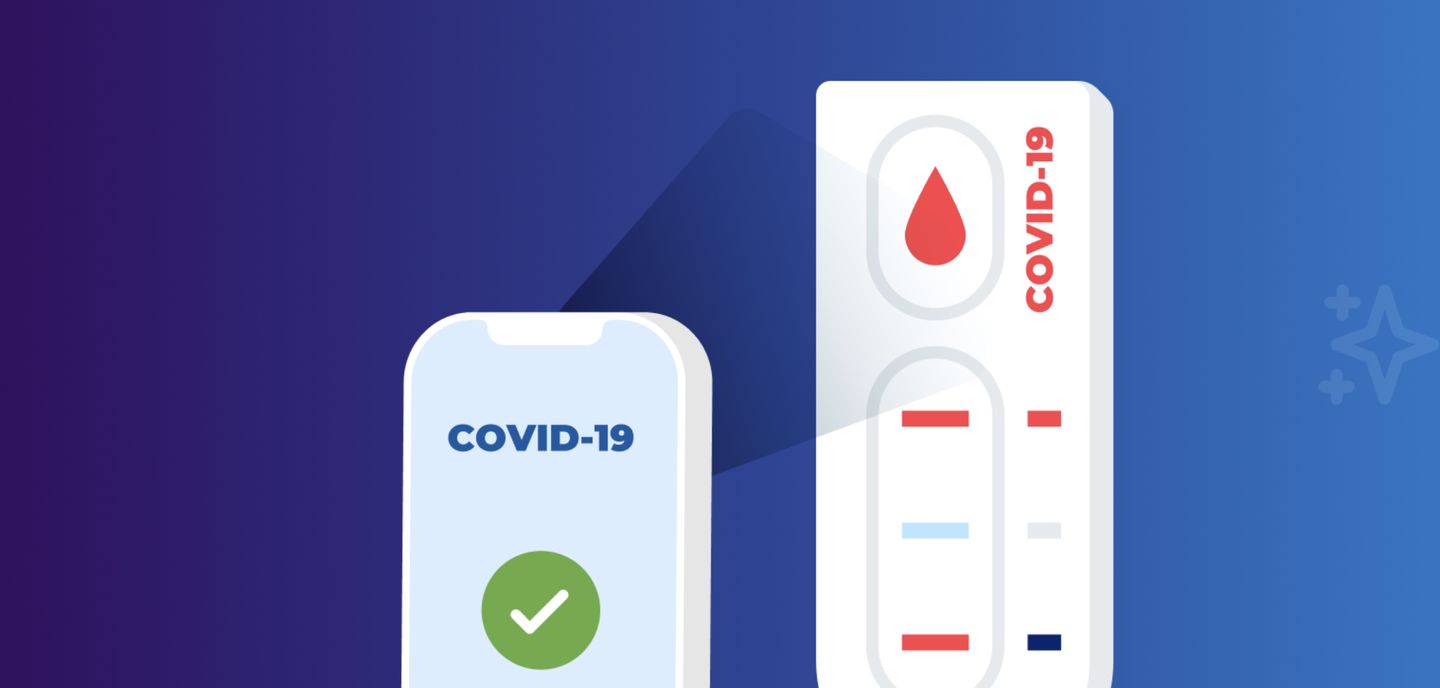
Passengers were tested before reaching the airport, and an infected result had to stop the flight. Neuramonks delivered a computer vision system that reads the test strip itself, so no result is self-declared.

Delivered for The Corona Test UK
- 70%
- Less production effort
- 60%
- Faster time-to-publish
- Catalogue
- Straight to episode
- Voice
- Human, not robotic
Delivered for the L&D team
- 70%
- Less production effort
- 60%
- Faster time-to-publish
- Catalogue
- Straight to episode
- Voice
- Human, not robotic
The Client's Problem
A Result Anyone Could Claim, and a Flight Nobody could Risk.
- A passenger reporting their own result
- The strip read by computer vision
- A photo that could be swapped or staged
- Verified capture with no step in between
- Faint lines judged by eye
- Classified by model, accuracy up 40%
What We Delivered
Six Pieces of Work, One Verified Result.
- 01 · Computer Vision
- Test strip detection
- Finds the cassette and result window in any photo.
- 02 · Applied AI
- Line classification
- Positive, negative or invalid, decided by the model.
- 03 · Applied Research
- Borderline result handling
- Faint lines classified rather than left to the eye.
- 04 · Security Engineering
- Tamper-resistant capture
- Closes the steps a person could use to fake a result, standard practice in AI document verification.
- 05 · Product Engineering
- Operator and passenger flow
- Test, capture, verify and issue in one sequence.
- 06 · Integration
- Result issuance and audit trail
- Every verified result recorded for the travel check.
- Across all six · Health and identity data
- Encrypted end to end
- Test images and results encrypted in transit and at rest.
- Access-controlled by role
- Operators, passengers and auditors see only their own scope.
- Auditable by design
- Every result traceable to the capture that produced it.
Relying on Results People Report Themselves?
A computer vision fraud detection developer scopes which pieces your build actually needs, in 30 minutes.
The Result
The Strip Decides, not the Passenger.
Reading the cassette with computer vision removes the step where a result could be reported, edited or swapped. Faint lines get classified instead of guessed, which is where the 40% accuracy gain came from.
40%
Better result accuracy, with the self-declaration step removed from the process entirely.
How The Engagement Ran
Four Phases: Detection to Rollout.
- Phase 1
- Discovery
- Testing flow and fraud routes mapped with the operator.
- Phase 2
- Detection model
- Cassette and result window detection trained on real tests.
- Phase 3
- Classification
- Line reading tuned on faint and borderline results.
- Phase 4
- Rollout
- Capture hardened, then released across testing sites.
- Computer Vision
- Deep Learning
- Image classification
- Mobile capture
- Audit logging
Why Neuramonks
Why Choose Neuramonks for the Corona Test in the UK?
- Outcome-driven delivery
- Accuracy targets set before development started.
- Medical imaging since 2018
- Production classification models across eight years.
- Built to resist gaming
- Fraud routes closed inside the capture flow, not after it.
- Deployable on your terms
- On-premises or air-gapped where policy requires it.
Common Questions
What Teams ask about this Build?
How does computer vision read a lateral flow test?
The model locates the result window in the photo, then classifies the control and test lines as positive, negative or invalid, the same AI document verification approach used across fraud checks, without a person interpreting them.
How does AI detect fraudulent test results?
The result is read from the captured strip rather than declared by the passenger, and the capture flow closes the intermediate steps where an image could be swapped, the same fraud detection logic that cut fake submissions by 40% in this build.
What does a computer vision fraud detection developer typically deliver?
For this build, a computer vision fraud detection developer delivered strip detection, line classification, borderline handling, tamper-resistant capture, the operator flow and result issuance with an audit trail.
What makes this one of the best AI fraud detection tools for medical testing?
Encryption in transit and at rest, role-restricted access, and a full audit trail behind every result, the standard a testing provider should expect from any AI fraud detection tool.
How does this compare to manual review or basic OCR checks?
Manual review depends on a person's judgement and OCR only extracts printed text, neither one catches a swapped photo or a doctored line. This build closes both gaps inside the capture flow, which is why it holds up as fraud-proof result checking where the older methods don't.