The Device Maker Had Microscope Images. We Built the Model that Finds Malaria in Them.
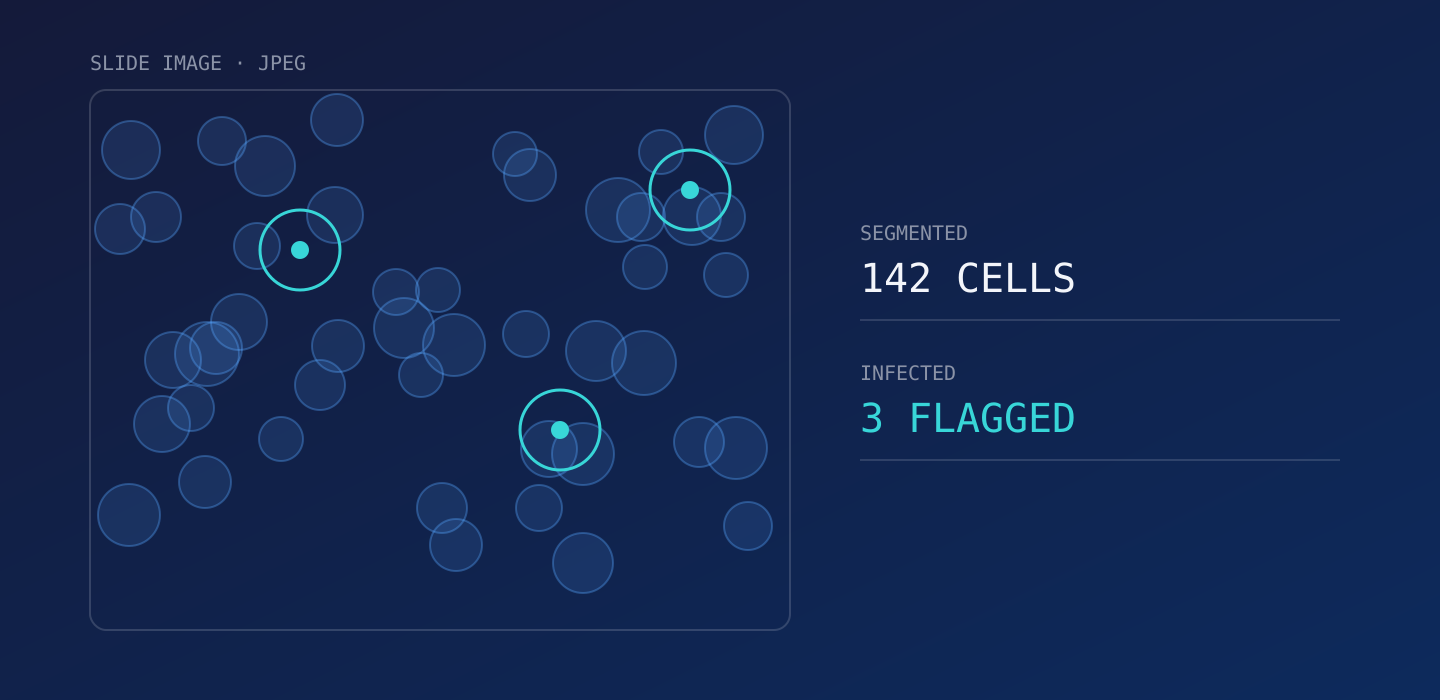
Every slide came off the scope as a JPEG and still needed a technician to read it. Neuramonks built the instance segmentation and AI malaria detection that runs inside their IoT product.

Delivered for the Device Maker
- 35%
- Better diagnostic accuracy
- 55%
- Less lab workload
- JPEG
- Straight from the scope
- IoT
- Built into th
Delivered for the L&D team
- 35%
- Better diagnostic accuracy
- 55%
- Less lab workload
- JPEG
- Straight from the scope
- IoT
- Built into th
The Client's Problem
Slides Read One at a Time, by Eye, Under a Microscope.
- Every slide reviewed manually by a technician
- Cells segmented and counted automatically
- Parasites missed on a heavy caseload
- Infected cells flagged, accuracy up 35%
- Images sitting as files nobody had read
- Results returned inside the device workflow
What We Delivered
Six Pieces of Work, One Reading Pipeline.
- 01 · Computer Vision
- Cell segmentation
- Applies instance segmentation to separate individual cells in a raw slide image.
- 02 · Applied AI
- Malaria parasite detection
- Flags Plasmodium infected cells from the same microscope JPEG.
- 03 · Data Engineering
- Slide image pipeline
- Handles raw scope output without manual preparation.
- 04 · Applied Research
- Stain and focus variation
- Holds diagnostic accuracy across slides prepared differently.
- 05 · Integration
- IoT product embedding
- The model runs inside the client's own device workflow.
- 06 · Product Engineering
- Result and review interface
- Counts, flags and images a technician can confirm.
- Across all six · Pre-launch product data
- Encrypted end to end
- Slide images and results encrypted in transit and at rest.
- Access-controlled by role
- Technicians and reviewers see only their own scope.
- Runs on your hardware
- Deployable on the device, so slides need not leave the lab.
Images arriving faster than anyone reads them?
We scope which pieces your build actually needs, in 30 minutes.
The Result
The slide is read as it comes off the Scope.
Instance segmentation counts the cells and detection flags the Plasmodium infected ones from the same raw JPEG, inside the device the lab already uses. A technician confirms a result instead of hunting for it.
35%
Better diagnostic accuracy, 40% fewer missed malaria cases, and lab workload down 55%.
How The Engagement Ran
Four Phases, Slide to Device.
- Phase 1
- Discovery
- Slide workflow and accuracy targets set with the lab.
- Phase 2
- Segmentation model
- Cell separation trained on real microscope images.
- Phase 3
- Parasite detection
- Infection flagging tuned across stain and focus variation.
- Phase 4
- Device integration
- Model embedded in the IoT product, then rolled out.
- Computer Vision
- Deep Learning
- Image segmentation
- Edge deployment
- IoT integration
Why Neuramonks
Why the Device Maker Chooses Neuramonks.
- Outcome-driven delivery
- Accuracy and workload targets set before development started.
- Medical imaging since 2018
- Production segmentation models across eight years.
- Built for embedded delivery
- Runs inside the client's device, not only in the cloud.
- Deployable on your terms
- On-premises or air-gapped where policy requires it.
Common Questions
What Teams Ask about this Build.
How does AI detect malaria in a blood slide?
Cells are segmented from the raw microscope image, then each is classified for Plasmodium infection, so parasites are flagged without a technician scanning the whole field, cutting missed cases up to 40%.
Does it work on raw microscope JPEGs?
Yes. The instance segmentation pipeline takes the scope's own output without manual preparation, which is what allows it to run inside the device.
AI malaria detection vs manual microscopy, which holds up better?
Manual microscopy carries inter-observer variability that AI removes, so stain intensity and focus differ less between labs and the model holds diagnostic accuracy across that variation.
What are the best AI blood cell classification tools for labs?
A single pipeline covering cell segmentation, parasite detection, the slide image pipeline, variation handling, device integration and the review interface, not a general classifier.
How is patient slide data secured?
Images and results are encrypted in transit and at rest, with role-based access, and the model can run on the lab's own hardware.