The Marketing Team Spent More Time Coordinating Posts than Writing them. We Built the Pipeline.
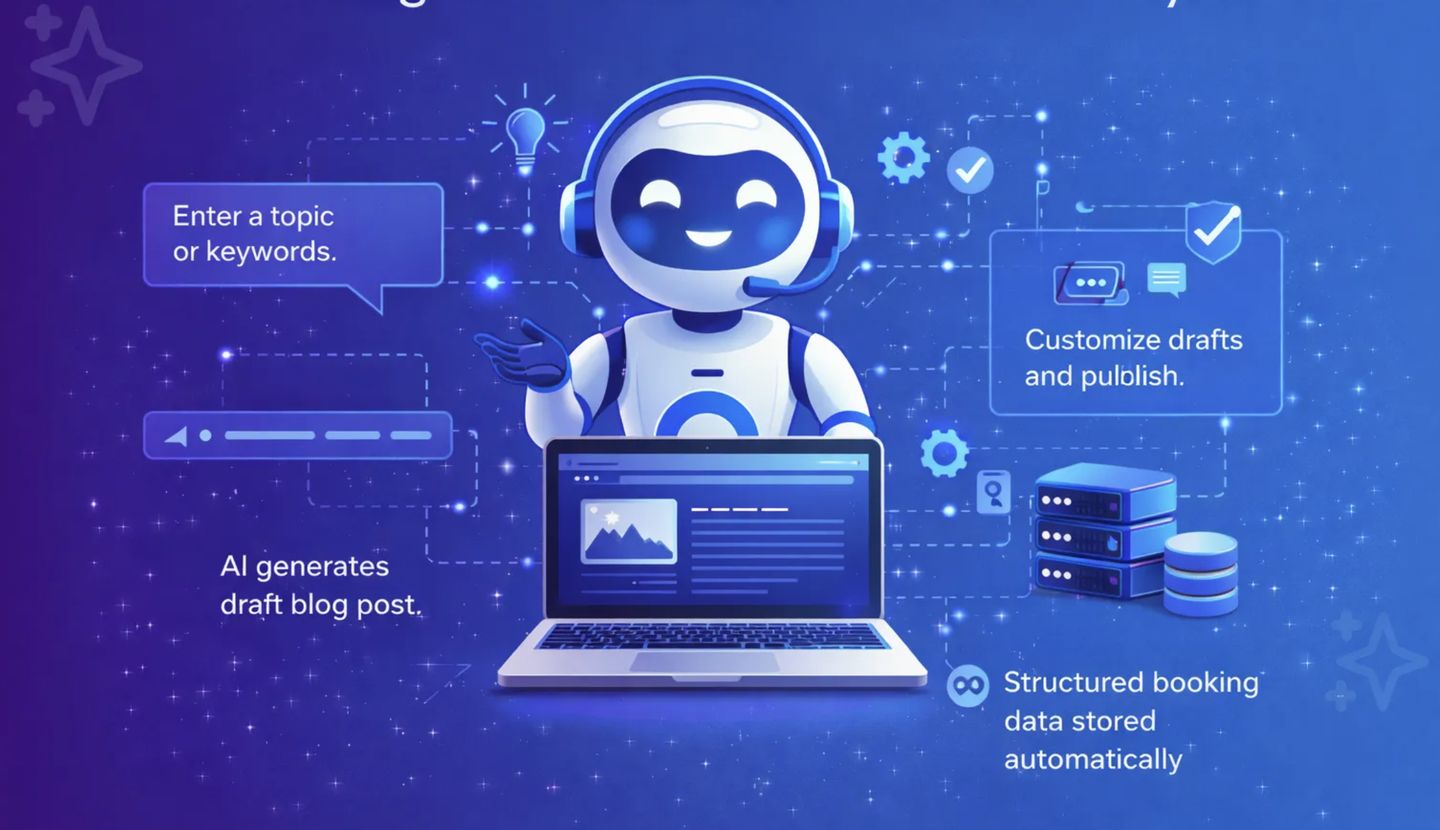
Briefs, drafts, reviews, and scheduling moved between people by email. Neuramonks built one of the best AI blog automation tools for marketing teams: a pipeline that takes a topic and carries it through draft, edit and publish without the chasing.

Delivered for the marketing team
- 60%
- Less production time
- Topic
- Straight to draft
- 0
- Coordination chasing
- Human
- Edits before publish
Delivered for the L&D team
- 60%
- Less production time
- Topic
- Straight to draft
- 0
- Coordination chasing
- Human
- Edits before publish
The Client's Problem
More Time Spent Chasing a Post than Writing One.
- A brief written and handed to a writer
- A topic in, a structured draft out
- Reviews chased across email threads
- Edit and approve in one workspace
- Publishing done by hand each time
- Production time down 60%
What We Delivered
Six Pieces of Work, One Content Pipeline.
- 01 · Content Engineering
- Topic and keyword intake
- A topic or keyword set is all the pipeline needs.
- 02 · Generative AI
- Draft generation
- Produces a structured post, not an outline to work from.
- 03 · Applied AI
- SEO and structure alignment
- Headings, metadata and internal linking built in.
- 04 · Product Engineering
- Edit and approve workspace
- Writers customise the draft before anything ships.
- 05 · Integration
- Publishing automation
- Approved posts pushed to the CMS on schedule.
- 06 ·Data Engineering
- Structured content records
- Every post stored with its metadata, automatically.
Across all six · Content and brand data
- Nothing publishes unreviewed
- Approval is required before a post can go live.
- Encrypted end to end
- Drafts and content records encrypted in transit and at rest.
- Access-controlled by role
- Writers, editors and admins see only their own scope.
More Coordination than Content?
We scope which pieces your build actually needs, in 30 minutes.
The Result
The post moves itself from topic to published.
The writing was never the slow part; the handoffs were. Because drafting, editing and publishing sit in one pipeline, production time dropped by 60%, while an editor still approves every post.
60%
Less blog production time, with manual coordination removed from brief through to publish.
How The Engagement Ran
Four Phases, Topic to CMS.
- Phase 1
- Discovery
- Content workflow and handoff delays mapped with marketing.
- Phase 2
- Draft generation
- Topic intake and structured post generation built.
- Phase 3
- Edit workspace
- Review, customise and approve in one place.
- Phase 4
- Publishing and rollout
- CMS publishing and content records wired in.
- Generative AI
- LLM
- SEO structuring
- CMS integration
- n8n content generation pipeline
Why Neuramonks
Why does the Marketing Team Choose Neuramonks?
- Outcome-driven delivery
- Production-time targets set before development started.
- Generative systems in production
- Pipelines that ship finished output, not drafts.
- Human in the loop by design
- Nothing publishes without an editor approving it.
- Deployable on your terms
- On-premises or air-gapped where policy requires it.
This pipeline is part of the broader Agentic AI Services offering.
Common Questions
What teams ask About this Build.
How do you automate blog content creation with AI?
It takes a topic or keyword set and produces a structured draft with headings and metadata, rather than an outline someone still has to write from.
Does a person still edit before publishing?
Yes. Drafts land in a workspace where a writer customises them, and nothing goes live without approval.
AI blog writing vs human writers: what actually changes?
Brief, draft, review and publish happen in one pipeline instead of moving between people by email, which is where most of the time was going.
What does it take to build an n8n content generation pipeline?
Topic intake, draft generation, SEO structuring, the edit and approve workspace, publishing automation and content records.
How does this compare to off-the-shelf AI writing tools?
Generic AI writers hand back a draft and stop there. This pipeline carries the piece through SEO structuring, an editor approval step, and CMS publishing, so nothing goes live without a human sign-off.