TABLE OF CONTENT
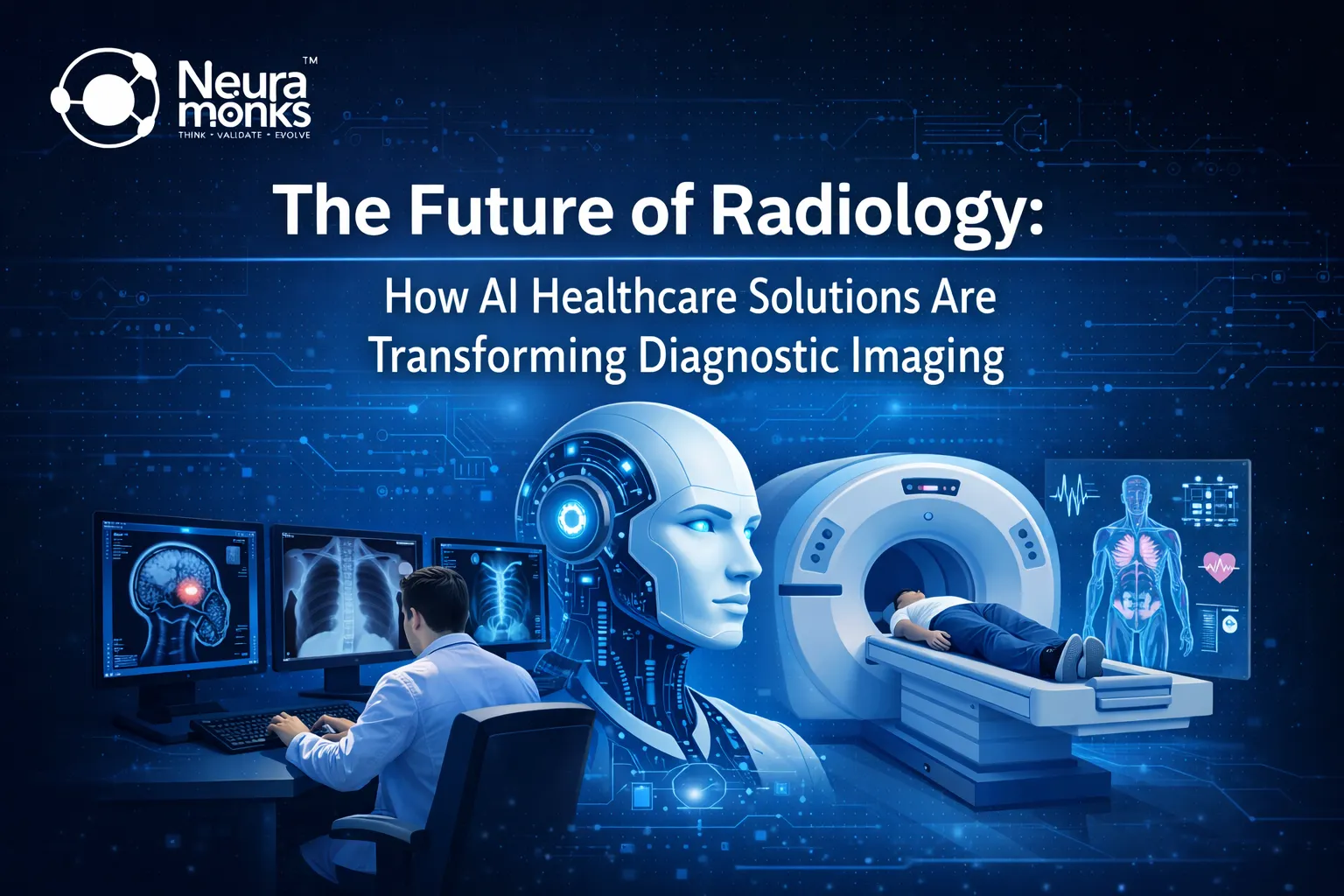
Imagine stepping into a hospital radiology department five years from now. The room hums with advanced machines, but what truly stands out are the intelligent systems working alongside radiologists—systems that help detect abnormalities faster, flag critical findings, and reduce the strain on overworked clinicians. This isn’t science fiction. This is the reality being shaped today by AI Healthcare Solutions, particularly through AI for Radiology applications that are redefining how imaging departments operate.
From early detection of diseases to streamlining workflows, Artificial Intelligence in healthcare is ushering in an era of faster, more accurate diagnostic imaging. In this article, we’ll explore how AI is used in radiology, why it’s becoming essential, the pros and cons, and the role innovative companies like Neuramaonks are playing in this transformation.
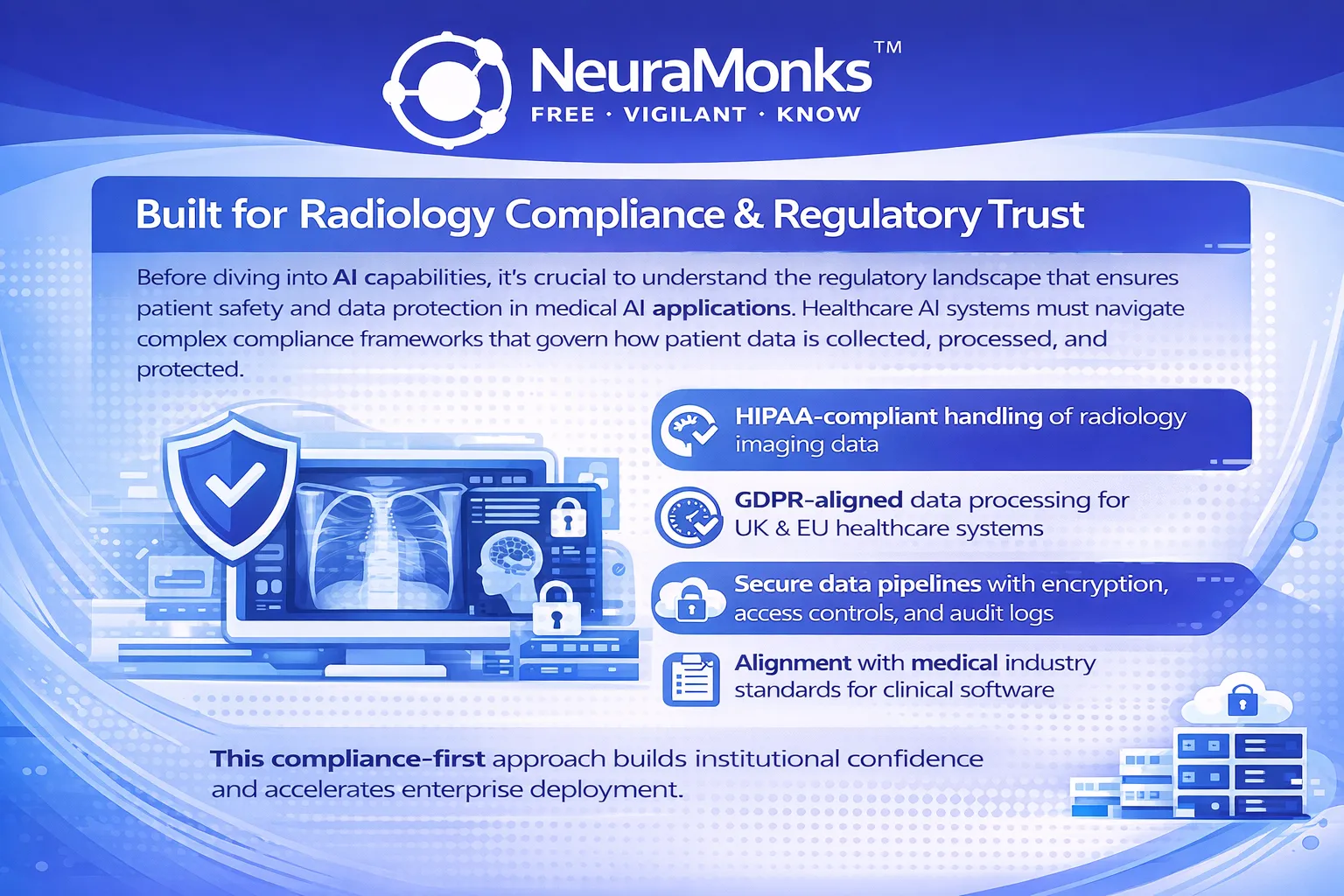
Built for Radiology Compliance & Regulatory Trust
Before diving into AI capabilities, it's crucial to understand the regulatory landscape that ensures patient safety and data protection in medical AI applications. Healthcare AI systems must navigate complex compliance frameworks that govern how patient data is collected, processed, and protected.
- HIPAA-compliant handling of radiology imaging data
- GDPR-aligned data processing for UK and EU healthcare systems
- Secure data pipelines with encryption, access controls, and audit logs
- Alignment with medical industry standards for clinical software
This compliance-first approach builds institutional confidence and accelerates enterprise deployment.
How Is AI Used in Radiology?
When most people hear “AI in radiology,” they think of robots reading X-rays. The reality is much more collaborative: AI tools act as partners to radiologists, enhancing their capabilities rather than replacing them.
AI’s Core Functions in Radiology
- Image Processing & Interpretation
AI-powered preprocessing and deep learning models enhance X-ray, CT, MRI, and ultrasound images—helping radiologists interpret scans faster and with greater diagnostic confidence.
- Anomaly & Disease Detection
Automated detection of tumors, lesions, infections, and vascular abnormalities reduces missed findings, supports earlier diagnosis, and lowers the need for repeat scans.
- Priority & Triage Systems
Critical and high-risk cases are automatically flagged, enabling faster review in emergency and high-volume radiology environments and improving patient response times.
- Workflow Automation & Reporting
Automated measurements, segmentation, and reporting streamline radiology workflows, reduce manual workload, improve consistency, and increase overall department throughput.
These applications fall under the broader umbrella of AI Healthcare Solutions, where intelligent software enhances efficiency, accuracy, and diagnostic confidence.
Stop Planning AI.
Start Profiting From It.
Every day without intelligent automation costs you revenue, market share, and momentum. Get a custom AI roadmap with clear value projections and measurable returns for your business.
AI in Radiology: Pros & Cons
AI solutions are transforming radiology by improving speed, accuracy, and efficiency—but they also come with challenges.
Pros of AI Solutions in Radiology
- Higher diagnostic accuracy: AI solutions detect subtle patterns and reduce human error.
- Faster reporting: Automated image analysis shortens turnaround time for results.
- Reduced radiologist workload: AI handles repetitive tasks, freeing experts for complex cases.
- Consistent analysis: AI solutions deliver standardized results without fatigue.
- Early disease detection: Enables earlier identification of cancer, stroke, and fractures.
Cons & Limitations
- Data dependency: AI solutions rely on large, high-quality datasets.
- Integration issues: Compatibility with PACS and EHR systems can be challenging.
- Regulatory & ethical concerns: Accountability and compliance remain critical.
- Cost barriers: Advanced AI solutions may be expensive for some facilities.
Bottom line: While challenges exist, AI solutions in radiology deliver clear clinical value—and their impact will only grow as technology matures.
Practical Medical Imaging Experience Behind AI Accuracy
Improving diagnostic accuracy in radiology requires real-world clinical exposure across diverse imaging scenarios. This experience spans machine learning and deep learning–based medical imaging use cases that help shape reliable AI Healthcare Solutions.
Real-world deployments include blood cell counting, malaria detection, lung and breast cancer imaging analysis, tumor detection systems, and ongoing work in tumor progression prediction. Additional initiatives cover glaucoma detection, chromosome karyotyping, COVID-19 imaging, and dental X-ray analysis.
In chest CT imaging, AI models can highlight regions suspicious for lung cancer that may be overlooked during manual review, enabling faster and more confident clinical decisions.
Extending Imaging Intelligence to Telemedicine
Telemedicine is a dedicated focus within modern medical AI initiatives, enabling diagnostic intelligence beyond hospital settings. One key application is AI-powered wound detection for remote monitoring, which supports online consultations, continuous healing assessment, and objective measurement of wound size and tissue changes over time.
By combining medical imaging intelligence with telehealth platforms, AI Healthcare Solutions help clinicians deliver consistent, data-driven care remotely—improving access while reducing unnecessary in-person visits.
What Are the Primary Benefits of Artificial Intelligence in Diagnostic Imaging?
While we’ve touched on benefits already, here’s a consolidated look at why AI is such a game-changer:
- Faster image interpretation and reporting
- Higher detection rates
- Reduced false positives and false negatives
- Better resource allocation
- Enhanced patient outcomes
- Scalable solutions for large hospital systems
- Optimization of imaging protocols
Not only does AI improve the quality of care, but it also helps healthcare systems become more efficient and cost-effective.
Which Companies Offer AI-Powered Radiology Imaging Software?
Hospital administrators exploring AI adoption in radiology often face a crowded marketplace filled with ambitious claims. While many companies are entering the space, only a few demonstrate real-world clinical usability. Among them, We has emerged as a notable name for its focused work in AI-driven radiology solutions designed specifically for hospital environments.
Rather than positioning AI as a replacement for radiologists, we builds systems that support clinical decision-making, reduce operational strain, and fit into existing workflows without disruption.
Neuramaonks: A Leader in AI Radiology Innovation
We specializes in intelligent image analysis software that works alongside radiologists to improve both speed and diagnostic confidence. Their solutions are designed to handle the growing imaging workload hospitals face today.
Our AI tools assist radiologists by:
- Enhancing diagnostic clarity, helping reduce ambiguous findings in complex scans
- Identifying disease patterns earlier, especially in high-volume imaging scenarios
- Automating segmentation and reporting, cutting manual effort by an estimated 35–40% per study
- Integrating seamlessly with hospital systems, including PACS and existing imaging infrastructure
In pilot hospital environments, We -supported workflows have shown:
- 20–30% fewer follow-up scans due to improved first-read accuracy
- Consistent reporting quality, even during peak imaging hours
- Noticeable reductions in reporting delays, particularly in emergency imaging
Their approach focuses on improving radiology efficiency without adding technical complexity, making the platform practical for both large hospital networks and mid-sized healthcare facilities.
While Neuramaonks is highlighted here for its demonstrated capabilities, hospitals should still evaluate AI vendors based on clinical validation, interoperability, ongoing support, and regulatory readiness before large-scale deployment.
Where Can Hospitals Find AI Radiology Solutions for Integration?
Hospitals today are no longer experimenting with AI for novelty—they are demanding measurable clinical outcomes, reliable integration, and tools radiologists trust under real-world pressure. This is where focused AI Healthcare Solutions providers like Neuramaonks differentiate themselves.
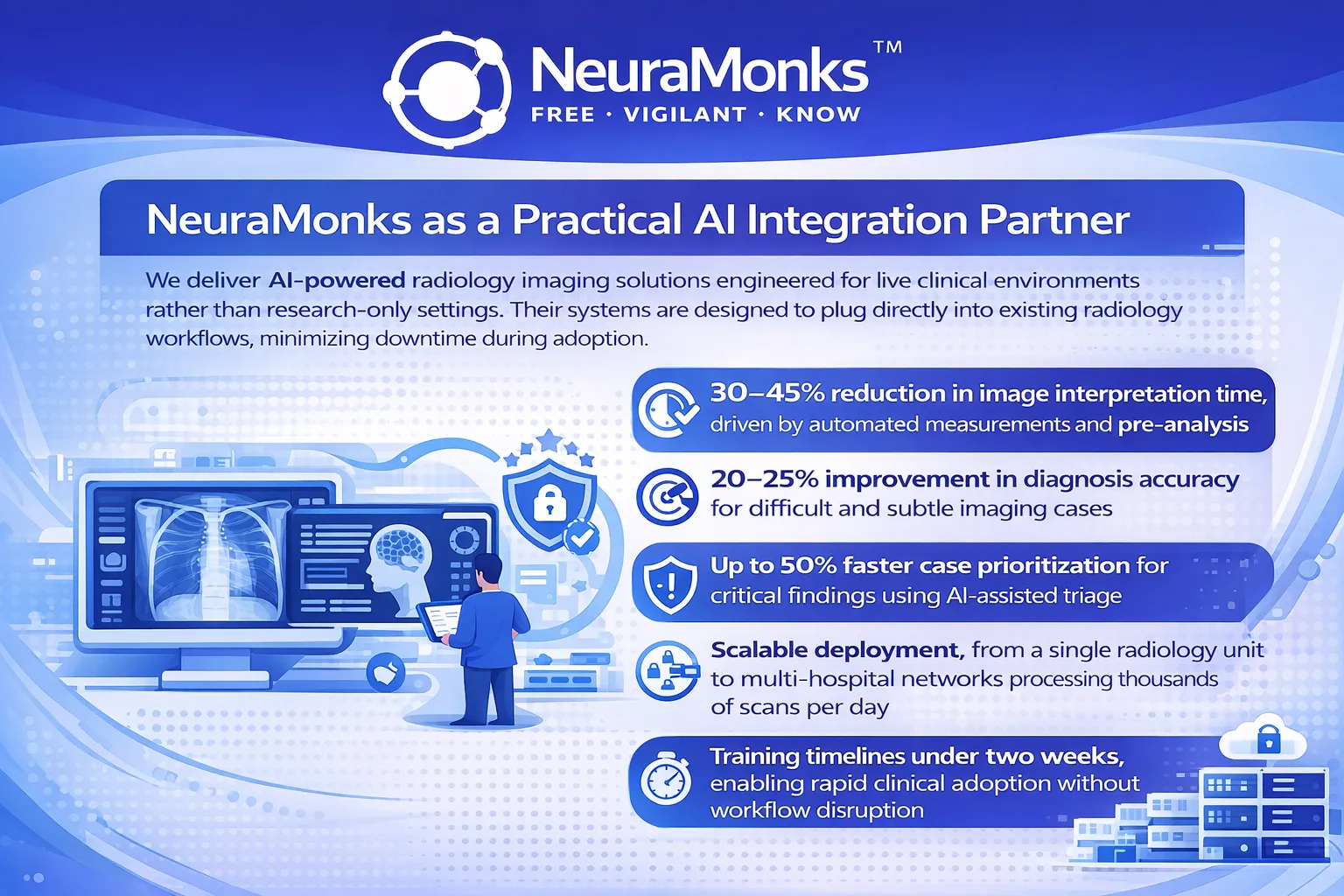
Neuramaonks as a Practical AI Integration Partner
We delivers AI-powered radiology imaging solutions engineered for live clinical environments rather than research-only settings. Their systems are designed to plug directly into existing radiology workflows, minimizing downtime during adoption.
Hospitals integrating with us AI solutions typically report:
- 30–45% reduction in image interpretation time, driven by automated measurements and pre-analysis
- 20–25% improvement in diagnosis accuracy for difficult and subtle imaging cases
- Up to 50% faster case prioritization for critical findings using AI-assisted triage
- Scalable deployment, from a single radiology unit to multi-hospital networks processing thousands of scans per day
- Training timelines under two weeks, enabling rapid clinical adoption without workflow disruption
Unlike generic AI platforms, we prioritizes clinical usability, ensuring AI functions as a quiet assistant in the background rather than a disruptive layer radiologists must manage.
How Hospitals Typically Integrate AI Radiology Solutions
Hospitals adopting us and similar AI Healthcare Solutions usually follow a structured, low-risk implementation model:
- Phase 1: Pilot Deployment
AI introduced in high-volume imaging areas such as CT, MRI, or X-ray, often covering 15–25% of total scan volume. - Phase 2: Performance Benchmarking
Diagnostic accuracy, reporting time, and backlog metrics compared against 6–12 months of historical data. - Phase 3: Full PACS Integration
AI becomes embedded into daily workflows, contributing to workflow automation and standardized reporting. - Phase 4: Advanced Analytics Expansion
Hospitals expand into predictive imaging insights and preventive diagnostics, improving long-term patient outcomes.
This phased rollout helps hospitals reduce operational risk while achieving early, measurable ROI—often within the first 3–6 months of deployment.
Real-World Case Studies
Our AI healthcare solutions are deployed in live clinical and telemedicine environments, delivering measurable impact.
- Cell Segmentation – AI-powered cell segmentation enabling accurate identification and analysis of cellular structures for medical imaging and pathology workflows.
- CareSync – An integrated healthcare AI platform supporting intelligent data workflows, clinical coordination, and scalable medical AI deployment.
- The Corona Test UK – A production-grade AI solution supporting COVID-19 diagnostic workflows within the UK healthcare ecosystem, designed for accuracy, speed, and compliance.
- Automated Wound Detection & Measurement –Using Deep Learning
A telemedicine-focused AI system delivering clinically accurate wound measurement, healing progression tracking, and remote clinician decision support.
Conclusion: Embracing the AI-Driven Future of Radiology
The integration of AI Healthcare Solutions in radiology isn’t just about high-tech tools—it’s about empowering radiologists, improving patient outcomes, and transforming the way healthcare delivers diagnostic precision. Artificial Intelligence in healthcare isn’t replacing human expertise; it’s amplifying it.
From improving diagnostic accuracy to reducing workload and enabling faster treatment decisions, AI stands poised to make radiology more efficient and effective than ever before. And with innovators like Neuramaonks pushing boundaries, hospitals have real, actionable options for integrating these technologies today.
Ready to explore AI solutions for your radiology department?
Reach out to AI vendors, request demos, and start with pilot programs. The future of diagnostic imaging is here—don’t let your hospital fall behind.